Who was “Majed Moqed”?

If you’re in the DC area, there will be a press conference tomorrow, Jan. 26, at the National Press Club in Washington, DC (529 14th St NW, Holeman Lounge). Featured speaker Sibel Edmonds, formerly a Middle East translator for the FBI, will be supported by several 9/11 families. Frustrated over intelligence lapses and other problems in the period preceding Sept. 11, 2001, Edmonds became an FBI whistleblower. She has now filed a lawsuit against the Justice Department.


It is important to keep the memory of 9/11 alive, and not for morbid reasons. Family members and intelligence experts continue to point out to a mostly unlistening press the stonewalling, unnecessary secrecy, and incomplete investigation that characterize the Bush response to 9/11. Ceaseless exploitation of the “war on terror” by the White House — the invasion of the Middle East, the reversal of FDR’s New Deal – is paralleled by an odd lack of effective detection. The press conference will highlight some examples.


But many oddities are apparent even from well outside the cloak-and-dagger world of international intrigue. Case in point:  the skyjacker named “Majed Moqed.”


For starters, the name itself is a nom de guerre. The “moqed” surname is not even an Arabic word, much less an Arabic name; it is Hebrew. – The skyjacker adopted an Old Testament word meaning “hearth” or more pertinently “firebrand,” among several fire-related terms, for his title. See for example

http://www.sacred-texts.com/bib/ebd/ebd170.htm and

http://www.godrules.net/library/eastons/eastons54.htm.


Not to belabor linguistics here, but the “hearth” sense of moqed also resonates in regard to one of the holiest Muslim sites, the Temple Mount:

http://cc.usu.edu/~fath6/Tmplemnt.htm.


The site also goes by another name, known throughout the Muslim world:  Majed Mount.

http://www.pbs.org/wnet/wideangle/printable/suicide_timeline_print.html.

http://www.nationmaster.com/encyclopedia/Majed-Mount:

The Temple Mount (also called Noble Sanctuary, Hebrew language: Har HaBayit, Arabic language: Al-Haram As-Sharif), is a mostly man-made hill in the eastern part of the Old City of Jerusalem.

It was the site of the first and second Jewish Temple in Jerusalem, and since the 7th century has been the site of two major Muslim religious shrines, the Dome of the Rock and Al-Aqsa Mosque. It is the holiest site in Judaism, the third holiest site in Islam, and has special significance to Christianity. It is thus one of the most contested religious sites in the world.”


“Majed” (spelled with an e) is not included in lists of masculine Arabic first names, like this one: http://www.ummah.net/family/masc.html#M. Perhaps this name has been confused with the common first name Majid, often transliterated “Majeed.” But it’s not the same. “Moqed” is likewise not found on any list of Arabic last names.


In short, this suicide attacker took a pseudonym naming himself after a brand snatched from a ruined and burning mosque or the last embers of a hearth deep inside the mosque, or both, with other similar resonances as well.


My question is: why isn’t the public allowed to know this? What danger or threat to national security could there be in clarifying this information?


Regardless of what the White House knows, the independent 9/11 Commission seems to know Majed Moqed’s identity: see page 232 of the Commission report, which states that Moqed is a Saudi “who hailed from a small town called Annakhil, west of Medina” and furthermore states that he had dropped out of college.


So what’s the big secret? Sen. Bob Graham mentions in his book Intelligence Matters that some people, perhaps especially in DC, seem to like knowing things that other people don’t know. Maybe that’s the key to the non-disclosure here. If so, too bad: Having more people in our electorate informed about some of these matters might actually jog someone’s memory or insight, leading to further developments. Maybe that’s the key to the non-disclosure.


Meanwhile, a beginning hypothesis is that, if this alias had any significance, it might pertain to a waqf – an Islamic trust. This skyjacker might be literally related to some trustees – although admittedly he might just have identified with the patriarchal keepers of a sacred trust. Something motivated him to go on a one-way trip in a kamikaze attack. It might benefit us all to find out what, if we can.


On the contrary, it would be cynicism-inducing if the White House knew of the family’s identity and failed to reveal it out of favoritism or special treatment.

Monica, UBL, Fox, CBS, and the Washington Post

Today’s WashPost introduces a forthcoming book, “Bad News,” by Tom Fenton, who retired from CBS and writes about his years there. (http://www.washingtonpost.com/wp-dyn/nation/columns/kurtzhoward/?sub=AR)

The article indicates that Fenton wanted to report on Osama bin Laden, for example, back in 1996, but was debarred from doing so by his network, for business reasons.


Fenton’s apparently well-placed criticisms of “corporate bean counters” probably deserve a better send-off than this Howard Kurtz piece (which appeared in print this morning but is billed as an “online-only column” on the web site). Kurtz has had something of a heyday for him, this fall, running thousands of words criticizing CBS over those truthful memos about George W. Bush’s ducking combat in Vietnam. The memo articles ran to far more length than the Post devoted in those same weeks to, for example, Iraqi dead.


That aside, if you’re going to criticize CBS for not running much early material about Osama bin Laden, it might occur to you to check the same topic for your own organization.


A quick Lexis-Nexis check shows that the Washington Post mentioned UBL a total of seven times from 1990 to 1996. Obviously, with little video footage of bin Laden available, he wasn’t going to land on TV much. The Post beat CBS by 7 to 0, or one item per year, for those 7 years.


In 1997, CBS mentioned UBL two to four times. The Post mentioned him 3 times – on pages A30, A7, and A34 – yes, a mention that bin Laden had made threats “against the United States and its 40,000 citizens in Saudi Arabia” actually got into a 626-word article on Page 7.


In 1998, the score was 253 hits for UBL on CBS, 150 for the Post. That year saw the embassy bombings in Africa, Clinton’s missile strikes, and a federal indictment linking bin Laden to the 1993 World Trade Center bombing. In 1999, it was 250 for CBS, 139 for the Post; in 2000 the score was 154 hits for UBL on CBS, 135 in the Post.


Admittedly, Lexis produces some duplicate hits, and more for transcripts than for print reports. For additional perspective, let’s turn to another topic.


In 1993-94, Paula Jones and Kathleen Willey got 83 mentions in the WashPost, compared to 1 (one) for UBL. In 1995-96, they got 58 mentions in the Post to UBL’s 7. In 1997 they trounced UBL 136 to 3 in the Post. Even in 1998, Willey and Jones still stomped on UBL by 978 to 150; in 1999, by 263 to 139. Only in 2000 did that particular vein peter out.


But by then it had been replaced by Monica. In 1998 – right around the time bin Laden was starting to make the US news cycles, as luck would have it — the whole Lewinsky mess hit the fan.


In 1998, Monica Lewinsky (or Monica S. Lewinsky, if you prefer), previously even less a household name than Osama bin Laden, made it into the Washington Post some 2,144 times. (That’s 2144 to 150, for those of you keeping score.) In 1999, she got 738 hits in the Post (to 139 for UBL); in 2000, she still got 363 mentions (to 135 for UBL).


Of course, CBS also hurled itself into this pitfall, with over 3400 hits for Monica in 1998, 818 hits in 1999, and 168 in 2000. Still, Dan Rather was among very few highly placed news people who complained early about the Monica saturation and tried to resist it. Once Lewinsky became combined with impeachment, resistance became impossible.


In fact, once you notice that the rightwing onslaught of criticism about Lewinsky successfully displaced assaults on US embassies by Osama bin Laden in the news, and that thousands of FBI man hours were removed from counter-terrorism and trained on Bill Clinton instead, you have to wonder how any fervid GWBush supporters get away with using a word like “treason.”


That brings us to Fox News. According to the transcripts database, throughout all the years from 1990 through 1997, Fox News mentioned Osama bin Laden a total of zero times. In 1998 – year of the embassy bombings, etc. – Fox mentioned UBL a total of 16 times. In 1999, UBL got 48 hits on Fox; in 2000, he again got 16.


Fox, of course, is a smaller network. Still, it managed to mention Lewinsky 743 times in 1998, 689 times in 1999, and 300 times in 2000. UBL was even more thoroughly trounced by Monica on Fox than he was in the Post.


By the way, those hyper-sophisticated film savants at Fox also mentioned “Wag the Dog” 41 times in 1998, and 5 of those hits are in combination with UBL. So you can subtract those five from Fox’s 16 mentions of UBL in 1998.


Looks as though nobody working for Rupert Murdoch had any inkling, any at all, that someone like bin Laden could pose a threat to Americans.


One more note: in 1998, CBS mentioned Osama bin Laden in connection with the World Trade Center 28 times. Doesn’t sound like much, maybe, considering that the 1993 bombings of the WTC had been linked to persons associated with bin Laden. But the Washington Post mentioned bin Laden in connection with the WTC, that same year, only 18 times.


And Fox News? Fox mentioned bin Laden in connection with the World Trade Center exactly once in 1998. The item was on August 25, on “Fox Special Report with Brit Hume,” with a vacationing Hume replaced by Tony Snow. The UBL item was rather quickly dispatched at the top of the program, superseded by leaks from the Monica investigation.

Academia, business and government: the lucrative triangle in Condoleezza Rice’s career

In 1971, corporation attorney Lewis F. Powell became worried about the loss of social prestige suffered by business – mainly big business – in America, so worried that he penned a memo about it to the head of the US Chamber of Commerce. Two months later, Powell was appointed as a Justice to Supreme Court by Richard Nixon; the memo came out when it was leaked to muckraking columnist Jack Anderson.


The Powell memo calls on American business to fight back aggressively, and Powell went so far as to list the avenues and fora through which business should fight back: academia, television and the news media, books and journals, paid advertising, politics, and the courts.


Powell represented this fight not as a fight for business interests but as a battle for “the American economic system,” and undoubtedly he thought of it as such. However, Powell named for criticism not only prominent leftists like William Kunstler but also Ralph Nader, whose book Unsafe at any Speed had recently focused public attention on corporate malfeasance in the automobile industry, bringing about long-overdue safety reforms. (Traffic accidents killed as many Americans each year, for years, as the entire Vietnam War.)


Powell’s key recommendations were that business organizations like the Chamber of Commerce step up their (1) organizing and (2) funding, to support, recruit and train cohorts within academia, the media, and the other sectors on his list.


Suffice it to say that by now, 2005, his recommendations have been maximally implemented. A raft of right-wing publications, think tanks, and lobbying groups have grown up since 1971, including “Accuracy in Academe,” the Cato Institute, the Heritage Foundation, the Manhattan Institute, etc. These and similar entities routinely publish the writing of pundits, former officeholders, and other political animals of their persuasion – beefing up the authors’ credibility by providing credentials of a sort, while also furthering versions of key messages (supporting regressive taxes, opposing “welfare,” offering “reforms” for successful programs like Social Security, etc.). Meanwhile, they also pay their writers – more than can be said for most progressive media – so the writers and scholars have an actual living income. (Then they get to sneer at the unwashed left.)


A prime unit in this army of the night has been the Hoover Institution on War, Revolution, and Peace. Founded as the Hoover War Library in 1919 by Herbert Hoover to preserve documents and foster study on the causes and consequences of World War I, it holds an enormous repository of materials on both World Wars. Its genuinely valuable holdings, however, have enabled it by now to mutate into a major force in para-scholarly publishing on history, politics, and economics and not incidentally to provide personnel for the Reagan and both Bush administrations. Condoleezza Rice is a recent example.


“It is located on the Stanford Univ. campus, but has no institutional tie to the university,” says Columbia Encyclopedia of Hoover, in a nutshell. Nonetheless, its web page is on the Stanford web site (http://www-hoover.stanford.edu), its name is coupled with Stanford’s at seemingly every opportunity, and anyone who gets tenure at the Hoover Institution gets the cachet of Stanford University, one of the nation’s premier research institutions in many fields.


On public policy, the Hoover Institution has turned a cold eye toward campaign finance reform (http://www.campaignfinancesite.org), changing or abolishing the International Monetary Fund (http://www.imfsite.org), liability lawsuits, and ratifying the Kyoto Protocol (re global warming).


But the Hoover Institution is not simply a dedicated, if intellectually isolated, group of curmudgeons exercising their First Amendment right to support curmudgeonly social policy. Hoover’s funding comes from exactly the kind of organized, aggressive, and exterior support envisioned by Powell. (Its web site posts a prominent link where you can donate.)


The precise extent to which it is supported by Stanford (and thus indirectly by public funds, which all private institutions benefit from) is unclear. What is clear is that most of the millions of dollars supporting the Hoover Institution comes from a few rightwing foundations and from corporations. The Olin Foundation (which recently gave a fellowship to pundit Dinesh d’Souza), the Bradley Foundation (which recently gave $250K to war-boosting Charles Krauthammer), and the Scaife Foundation have been particularly consistent in support.


Hoover’s corporate donors include Exxon, Dean Witter, J. P. Morgan, and Transamerica (where Rice was a director) among many others. Obviously, the large entities funding Hoover also have thumbs in the federal-budget pie: space and transportation manufacturers are federal contractors; agribusiness has a stake in “deregulation”; and the financial companies have an enormous stake in privatizing Social Security; etc.


Condoleezza Rice’s ties to Hoover are too extensive to list completely, but she remains enormously beholden. In fact, Rice is a prime example of the kind of beneficiary that Powell presumably envisioned. It was the Hoover Institution which brought her onto the Stanford campus in 1981, as a fellow, with a $30K research fellowship. No one has specified publicly what her teaching load was that year (any more than her fellowship amounts and donors, remuneration for her numerous speaking engagements, academic curriculum vitae, etc, have been released), but the position enabled her to be appointed to tenure track, and the rest, as they say, is history.


In 1985-1986 she held another National Fellowship from Hoover, also holding a fellowship from the Council on Foreign Relations, in DC. She later returned to Washington, DC, in the administration of former President Bush.


Speaking of history, it is significant that when Rice returned to Stanford after the first Bush administration, the Cold War was officially over, and Rice was a Cold War scholar. In the early 1990s, the Cold War period was important primarily as . . . history. Its heyday as a generator of hot think-tank postures, media attention, and political campaigns was over, at least partly because its heyday as a generator of immense federal contracts had ended. So, what to do, for people like Bill Kristol, Rice, and Charles Krauthammer, who had invested their entire adult careers in Cold War discourse? For Rice, the Hoover Institution stepped up to the plate again, with a senior fellowship which tided her over from 1991 to 1993, when she was named provost of Stanford.


Rice is today “the Thomas and Barbara Stephenson Senior Fellow at the Hoover Institution” (www.hoover.stanford.edu/pubaffairs/Releases/0700rice.html). She received this endowed chair during the 2000 election. The annual income is not publicized, but endowed chairs always pay a solid six figures. The Stephensons, major GOP contributors, also donated heavily to Bush.


Since Rice is listed as “on leave” from Hoover, it is to be hoped that she is not currently drawing an income from the endowment. The White House and Rice have not responded to questions. In any case, the chair is there waiting for Rice to return to, after her leave. No one seems to have thought to ask Rice, even pro forma, to express independence from Hoover or from the venture-capital CEO openly, literally, financing her.


Nice work if you can get it – except for that little matter of having to support the most inhumane “wartime” policies ever devised by a democracy.


Condoleezza Rice: Academic Background

At every stage of her adult career, the rightwing-funded Hoover Institution has been Condoleezza Rice’s platform and haven. The Institution’s newsletter said in summer 1999, “Condoleezza Rice has been appointed a senior fellow at Hoover effective July 1. / Rice, who has been provost of Stanford University since 1993, left that post on July 1. In addition to her appointment at Hoover, she will serve as a professor of political science at Stanford University. She will be on leave during the upcoming academic year.”

(http://www-hoover.stanford.edu/pubaffairs/newsletter/99summer/rice.html)

Rice has been extensively on leave from her professorship at Stanford in recent years, as the world knows. But Stanford has provided her a generous buffer throughout her postgraduate career.


Rice and the White House have not replied to questions placed in several emails and telephone calls.


Rice graduated from the University of Denver in 1974 at the age of nineteen, with top grades, a BA in Political science, and a Phi Beta Kappa key. She then went to graduate school at Notre Dame for a year, receiving a Master’s in political science. Notre Dame, like Denver U, is a rather conservative institution (it has an extensive “Whitewater archive”). Rice’s postgrad area of emphasis was Russia and Soviet studies; Notre Dame had a well-established Soviet studies department with political connections. Professor George Brinkley was among a series of faculty members to take Rice under his wing and mentor her extensively.


With the master’s degree, she returned to Denver to pursue a doctorate in political science, working largely under the guidance of Professor Josef Korbel, who continued to work with Rice until his death in 1977.


While still a grad student, Rice took a seven-week research trip to the Soviet Union, with a stop in Poland. In 1976 or 1977, she was also an intern with the Department of State in Washington. At that time she was still a Democrat. The contact person at State says the internship was with the Bureau of Educational and Cultural Affairs, although little is known about the internship because records were less well kept then. He comments, “We can tell you that she is the first nominee for Secretary of State whose experience included an internship at the State Department.”


Rice was also an intern with the Rand Corporation in 1980. Rand has not returned calls for comment. She later became a director at Rand.


In August 1981, Rice received her PhD in political science from the University of Denver. For context, The Digest of Education Statistics shows 571 doctorates awarded to black non-hispanic women in all fields, in the US, for 1980-81. Of 3,114 PhDs in the social sciences awarded in 1980-81, women earned 845.


It is a bit harder to determine how many of those 3,114 PhD graduates got university teaching jobs. There were 484 PhDs in political science and government that year, along with 1,875 master’s degrees.


In the four traditional program areas in the seventies, the college teaching market cratered first for Humanities and Fine Arts, then for Social Sciences, last for Sciences.


Academic horror stories came floating back from anyone who attended one of the giant academic job conventions during that period, like those held by the Modern Language Association or the American Psychological Association. One philosophy convention, the story went, had ten thousand applicants and two jobs. A friend who came back from an MLA convention said a guy stepped forward in a hotel elevator when the doors closed, turned around and faced the captive audience of strangers, and began, “I’d like to tell you all about my dissertation . . .”


This writer happens to know four excellent political scientists, from the same academic generation, personally; three are men and the fourth an African-American woman. All four had excellent graduate track records; none had a straight shot at an academic career. Two of the men, each with a Harvard doctorate, failed to land a tenured professorship; one went into government research, the other into postgraduate business school administration. The third achieved tenure and even an endowed chair, went into university administration and then had to relocate after being reorganized out of a job.


The woman, whom I consider excellent and brilliant, has a successful academic career but often serves the equivalent of four academic positions, a not unusual situation for women promoted in universities.


One gets the distinct impression that Rice was not among PhD grads sending out dozens or hundreds of job application letters to institutions around the country. “Rice first came to Stanford in 1981 as a fellow in the arms control and disarmament program,” according to the Hoover Institution bio. She switched from registered Democrat in 1982. For her first year, Stanford gave her a $30,000 research fellowship in its Center for International Security and Arms Control, possibly a first for a woman. The average salary for a full professor in Political Science that year, according to the Digest, was $33,437; for an Associate Professor, $25,278; for an Assistant Professor, $20,608; and for an Instructor, $16,450. Average salaries at all levels were lower for women.


During Rice’s first year, Stanford also offered her a three-year Assistant Professorship under an affirmative action program. 


Her dissertation was published as a book, The Soviet Union and the Czechoslovak Army, 1948-1983: Uncertain Allegiance, in 1984 by Princeton University Press, with the help of Professor Bernard Lewis. The dissertation argues that in the relationship between the Soviet Union and the Czech military, the Soviet Union was the dominant partner, although the relationship changed in some ways over time.


When the three years were up, her position was renewed for another three years, and Rice was promoted to Associate Professor in 1987.


From 1981 on, her career was a sequence of treks back and forth from the Hoover Institution to Republican administrations. From 1985 to 1986, she held a National Fellowship from the Hoover Institution on War, Revolution and Peace. Simultaneously she also held an International Affairs Fellowship from the Council on Foreign Relations, from July 1985 to June 1986 according to the Membership Department at the CFR. Their contact person says courteously that they are not allowed to give out the fellowship amount.

In conjunction with the fellowships, “Rice went to Washington, D.C. to work on nuclear strategic planning at the Joint Chiefs of Staff,” according to the Hoover bio, returning to Stanford afterward. She was 30 when she went to work with the Joint Chiefs.  

The bio continues, “Rice returned to Washington in 1989 when she was director of Soviet and East European affairs with the National Security Council. She also was appointed special assistant to the president for national security affairs and senior director for Soviet affairs at the National Security Council under President George Bush.”         

Back at Stanford, she was promoted to full professor in 1993. Rice has said that she was surprised when, a few months after her promotion, she was also named as the new provost, heading financial affairs for a university budget of about $1.5 billion.


Soon she also had the assignment of firing quite a few people: Stanford reportedly suffered a $20 million deficit. Individuals at Stanford are not eager to talk about this period on the record, but evidently the administration made the typically cynical move of assigning unpopular and draconian tasks to someone who filled two minority slots. (This managerial tactic is not unusual in academia any more than it is unusual in business or government.) Rice seems not to have been too reluctant but has been quoted subsequently as regretting that she was somewhat hardnosed.


In summary:      Rice is diligent and capable, but her career has been most consistently and strongly marked by her willingness to do what she was told. Back when she was told to practice piano and make good grades, the willingness was socially productive. Now that she has become the voice of the Bush White House in foreign affairs, it has become the reverse. Her connection with the administration’s Iraq invasion, indefinite detentions, torture of prisoners captured in combat, and refusal to let prisoners see attorneys have tainted and compromised her credibility. Her appointment at State would be a provocation that would further diminish US credibility and destabilize global affairs.


There is also a fearsome possibility, as other writers have pointed out, that Rice will be assigned the task of firing independent analysts and solid researchers in the State Department. If this assessment sounds harsh, it should be measured against her track record in academia, where Rice has been the beneficiary of primarily rightwing academic interests who have sponsored her at every turn since high school, and has always produced the performance demanded.

An open letter to Mr. Soros

Actually, I don’t really want to write “An open letter to George Soros,” because I respect Mr. Soros more than I respect, for example, Rush Limbaugh, to whom I wrote an open letter a year or two ago. Incidentally, that lightweight piece (published in the Richmond, Virginia, Style Weekly) drew more email than any several columns usually draw, and the fact cannot be too widely known that at least 98% of the emails were in my favor. I myself was amazed at the amount of positive response. Mr. Limbaugh may or may not have that “10 million” audience we hear so much about; I personally doubt it. Believing otherwise is rather like insisting that George W. Bush is “popular,” with the lowest inaugural approval rating in American history.


Still, Mr. Soros has reportedly expressed a wish to counteract the permanent rightwing media campaign, by funding other voices. Good aim. A friend of Rush Limbaugh’s once told me that Limbaugh has been paid probably three hundred million dollars ($300M) by the entities contracting with him.


The purpose of this article is to argue, however, that that goal should not be pursued top-down. The best way to counteract what has been done by Limbaugh, O’Reilly, Krauthammer, the Rupert Murdoch, Rev. Moon and Clear Channel media empires, the “Project for the New American Century” and a host of rightwing think tanks is not to mirror them.


The best way to undo some of the harm done to America over the past thirty years is to repair and restore some of what this well-funded claque has damaged: learning at all levels, literacy and information, an unafraid press, and any small sector independent of the giant media outlets. The good news is that, if you’re going to help the grass roots, money is often most effective in small amounts.


(1)   Small public libraries: Free people, free libraries. Across the nation, we have small public libraries struggling to keep their doors open. They fight for crumbs of funding year after year, while watching everything good swept off the table to support the “war on terrorism.” Incidentally, they’ve seen this kind of thing before: the “crack epidemic” worked the same way. They’re staying open largely through donations and volunteer efforts. Some years ago, one woman single-handedly maintained an exhibit of pre-Columbian artifacts in the public library in Clarksdale, Mississippi, because there was no museum around for these unique items. It’s the big cities (“inner city” in the code phrase) that get the worst press, but the same kind of thing is going on in small towns and tiny towns throughout the USA.

(2)   Small newspapers: Genuine community newspapers are often the spine of communication in their small towns or suburbs. Admittedly, a number of these have been scooped up by chains including Moonie entities, but many still try to be independent. Some are in Rocky Mountain states, some are in the Deep South, several are in Texas – including one in Crawford, Texas, where GWBush bought his property in 1999. They too, like the libraries, are maintained largely through volunteer efforts, and they could use some help. Look to some of the tiny weeklies in Maryland, Arizona, New Mexico, Idaho and Louisiana if you really want to strengthen the grass roots.

(3)   Low power radio: Low power FM radio needs all the help it can get. Those airwaves belong to the public, and some of the public knows it. Large media conglomerates are doing everything they can, with assistance from well-paid lobbyists and acquiescent congress members, to shrink the ability of low power radio to exist. Any community effort to get more community radio – on the West Coast, in the South, in Texas, or anywhere else – should be reinforced.

(4)   Freedom of information: Some states are preserving and upholding public records, but others are imitating the Bush administration model. Sometimes they use “security” or the “war on terror” as the pretext for secrecy. Almost any individual researcher and organization who pursues Freedom of Information investigations at the local, state or federal level needs reinforcement.

(5)   Legal assistance for the poor and near-poor: Generally, in the budget constraints intensified by current policy, anyone not actually a homeless indigent has trouble getting legal representation. The problem has social consequences: women trying to get their child support, nonviolent offenders who should be doing community service instead of jail time, women needing protection against domestic abuse, and smalltime clients cheated by their own lawyers all get short shrift. Almost any entity or organization that helps ordinary people deal with the maze of legal language in courts or with the legal process needs reinforcement. This is the kind of thing the hard right has done for years: anyone charged with trespassing at a Planned Parenthood clinic, for example, tends to get legal help and bail money fast, through whatever channels.

(6)   Litigation: Bush is pushing legislation that will expand the already near-absolute power of corporations to get away with killing and other grievous harm. Meanwhile, we have giant media corporations willfully engaged in promoting an unjust war, directly resulting in deaths and injuries for thousands of people; we have private military and security contractors pursuing what amounts to foreign policy, with no redress for people harmed by their practices; and we have a large railroad company using taxpayer-funded Amtrak as its buffer and pockets for its own mistakes. Small cases by ordinary people often need reinforcing.


What these items have in common is that they are all based on examples from small communities that would be understood by almost anyone in the wider community. Also, money even in small amounts would be highly effective for them. And their improvement would have a ripple effect in their communities, sparing public resources and ordinary people’s energy for attention to other matters including home, community and country.


To counteract what the parasitic Right is doing, help the public on which it preys.


In the sphere of partisan politics, if Democrats are going to be constructive, they have to learn that their policies represent 98% of the population in this country, and they have to learn to behave accordingly. But whether the Dems learn it or not, anyone who actually wants to work for the people has to do so.

Describing Bush

It is too often accepted as a given that any officeholder wishes to project an image of himself better than he generally is. 


We may all be biased in our own favor, as fallible human beings.  The bias in favor of “dear self,” as one of Jane Austen’s most idealistic and thoroughly good characters says self-critically, may be a universal.


Self-criticism, that is enlightened and principled self-criticism, is also a universal ability.  But a universal is not a constant.  Face it:  some people were brought up better than others.  Some of us were brought up to think of others rather than just of ourselves.  Some of us were brought up to think about long-term self-interest rather than just short-term self-interest.  Some of us were brought up to think.


None of these groups seem to number George W. Bush among their members.


Admittedly, any class of elementary schoolers assigned the short essay, “Describe George W. Bush,” would have to do the assignment by the seats of their small pants, with little help in accuracy or focus from major media outlets.  Any reasoned effort to evaluate Bush as a person in highest office has to proceed from connecting the dots, so to speak.


However, reasoning has its own universals.  Reasoning on or trying to figure out any topic one is not already immersed in begins with what we already know.  To find out what we don’t know, begin with what we do:  known facts; givens; universals.


Here’s part of what we know regarding Bush and his team.  Never before in American history have we had a president start a war that his relatives profited from financially.  Never before has a U.S. president appointed two relatives and a college chum as ambassadors (Stapleton and Walker to the CzechRepublic and Hungary, Ashe to Poland). 


Never before have a U.S. president’s close relatives been involved in the security industry; never before have they had financial ties to military contractors; never before have they been engaged in off-shoring.  Never have a president’s brothers so engaged in dealings with foreign businesses and foreign governments.


Always before, invading another country has been considered the abomination it is.  Even the Reagan and previous Bush administrations refrained from invading a country that had not attacked us.


By all accounts, this White House extends a more intense grasp over the news media than any other administration in history.  By all accounts, it is intensifying – literally, daily intensifying – its grasp on the Intelligence Community.  Its grasp on the GOP-dominated Congress is unquestionable.


An underreported fact is the way the White House coordinates its policy campaigns with Republicans in individual states.  Look at Ehrlich in Maryland and Rick Perry in Texas for two examples.  A reasonable conclusion would be that this is the most anti-federalist administration in U.S. history.


Bush’s performance in the three debates confirms key hints from the slight reporting about Bush that we get:  he has segregated himself from news reports, analysis or opinion that he wouldn’t like, he literally refuses to deal with or even to hear any challenge, and he extends that self-segregation to all matters that affect the public weal including the Iraq occupation.


On every international occasion that he might have chosen to present a better face to the world, he has muffed, most recently with regard to the tsunami.  That initial response of $400,000, given by a lowly staffer, was not a first step.  It was Bush’s response, or rather non-response.  Why?  Because it simply didn’t occur to him that better would be better than worse.


Like his comrades in arms – Rush Limbaugh, Bill O’Reilly, Dick Cheney, Antonin Scalia and Clarence Thomas, Condoleezza Rice – George W. Bush’s main concern is never to figure out what is better and do it.  His main concern is to figure out what advantages him, or his key interests, and pursue that. 


Sometimes, as with the tsunami disaster, he genuinely doesn’t recognize the difference between better and worse.  More often, he at least vaguely recognizes the difference, but also perceives it as a threat to him.  Remember when John Kerry made the offhanded point that a policy should meet a “global test” of rationality or constructiveness or beneficiality?  Bush reacted EXACTLY like an underperforming college kid to news that HE was going to have to “pass a test.”  That wasn’t just lying – although probably Bush’s handlers quickly set him straight, afterward.  That was genuine resentment, the genuine, heartfelt resentment of a hopelessly underqualified and overpromoted man, at the barest mention of any possibility, any mere suggestion, of something better.


Anything better, of course – accuracy and fearlessness in the news media; kindness and generosity or even enlightened self-interest in our economy; tolerance in religion or in the larger world; ability and erudition or even self-discipline in professions including law, medicine, and college teaching; honesty and modesty in business and finance – is unfailingly represented as “liberal.” 


(Quite probably, anyone in the news media who uses, or even knows, the words “bicameral legislature” is suspect on that ground alone to the team in the White House.)


Worse yet, anything better is ruthlessly combated by the current White House, with help from rightwing-funded pseudo-media who work directly with White House personnel, GOP officeholders, and lobbyists.  They make the better cause appear the worse, as John Milton put it.  Milton knew a phony-populist pseudo-leader when he saw one (he was not “of the devil’s party,” contrary to Romantic speculation) and if this crew has its way, fewer and fewer individuals will be able to read Milton over the next generation, or to read him with any understanding.


“Reducing complexity in the tax code”

“Reducing Complexity in the Tax Code”


George W. Bush is naming a commission to study how to simplify the tax code, and “everything is on the table,” according to one spokesperson.


Forewarned is forearmed.  Any GWBush tax proposal will have one, and only one, goal:  to shunt any tax burden even more away from corporations and individuals of wealth, and even more onto the rest of the public.


The proposal can be used to gauge the impact of what David Brock calls “the Republican noise machine” on media outlets.  Any outlets (Fox News, the Rev. Moon’s Washington Times, and Clear Channel spring to mind) treating Bush’s proposals at face value as “reforms” are tainted or compromised.  Any outlets trying to be even relatively clear about regressive taxes are still trying to preserve some journalistic accuracy and integrity.


Meanwhile, in the public interest, it is important not only to point out gaps and distortions in prevailing representations (“reform”? from Bush?).  It is even more important to mount better proposals.


The grain of truth in the campaign to make our taxes yet more regressive is that the tax code is indeed long and unwieldy, and there are legitimate ways to simplify and clarify it.  These are precisely the ways the Bush team does not tackle and literally does not mention.


For example, one good way to simplify the tax code would be to simplify the corporate structure.  Every small-d democrat, true republican, and progressive should be looking at the raft of nefarious entities legally allowed in the USA today:  limited liability companies, limited partnerships, limited liability partnerships, holding companies, shell corporations closely related to dummy companies, off-shore subsidiaries – the list seems endless. 


All of these entities have purposes at odds with the public interest:  to serve as tax shelters, to allow companies and individuals to conceal assets and money, to occlude records that should be public, to inhibit transparency and accountability, etc.  They complicate the task of auditors, regulators and accountants.  They enrich corporate lawyers, bookkeepers (or corporate neglectors of bookkeeping), and PR sectors.  The financial aim of staving off taxes and scrutiny inevitably expands and develops to serve fraud and chicanery – and therefore ultimately to serve, for example, drug and weapons trade, child trafficking, money laundering, and terrorism.


Eliminating these unnatural and grotesque exhibits of greed and chicanery would also simplify the tax code, which has innumerable sections devoted to them.


Step One.  Here is a short list of the peculiar financial entities referred to above, with some web sources for quick definition and information:


“Limited Liability Partnerships”: 

http://www.mycorporation.com/Llp.htm

Many attorneys and accountants find the LLP as a very attractive alternative since it shields the partners from vicarious liability, can operate more informally and flexibly than a corporation, and is accorded full partnership tax treatment. Note, in California, with certain exceptions, the LLP is only available to attorneys and accountants.”


http://business-law.freeadvice.com/liability_partnership.htm

A Limited Liability Partnership or LLP is a relatively new creation that operates much like a limited partnership, but allows the members of the LLP to take an active role in the business of the partnership, without exposing them to personal liability for others’ acts except to the extent of their investment in the LLP. Many law and accounting firms now operate as LLPs.”

[Wonder whether limiting LLPs will be part of Bush’s “tort reform”? hahaha.]


“Limited Liability Companies”:

http://www.legalzoom.com/legalzip/LLCs/llc_procedure.html

Limited liability companies, or LLCs, are becoming more and more popular, and it’s easy to see why. They combine the personal liability protection of a corporation with the tax benefits and simplicity of a partnership. In addition, they’re more flexible and require less on-going paperwork than corporations. We can help you quickly and easily set up a new LLC, or convert an existing business into an LLC. Below is our 3-step process . . .”


http://www.cbcgroupinc.com/entity_structuring.htm

Companies may adopt a variety of different entity structures including sole proprietorships, partnerships, limited liability companies (LLC), S corporations and C corporations and making an appropriate decision can be difficult. Often, it is in a company’s best interest to have more than one entity, depending on the amount of assets that are owned.”


http://www.roninsoft.com/llc.htm

[Good over-all discussion of the pros and cons of LLCs.]


“Limited Partnerships”:

http://www.entrustadmin.com/investment_options/Limited_Partnerships.html

Limited Partnerships may be purchased and sold by IRAs and Qualified Plans.  
Registered and unregistered interests in Limited Partnerships may be purchased and sold by IRAs and Qualified Plans.”


http://www.asiatradingonline.com/company.htm

[On setting up a Limited Partnership in Thailand.]


“Holding Companies”:

 (http://www.federalreserve.gov/generalinfo/fhc):

As of the end of 2004, bank holding companies are now allowed to be financial holding companies as well.


http://www.lowtax.net/lowtax/html/offon/canada/canhold.html:

[On setting up offshore holding companies, including in Canada.]


www.insinger.com/privateClients/securingYourFuture/investmentHoldingCompanies:

Investment holding companies are an effective international vehicle for doing business, protecting assets and taxation planning.”


“Shell Corporations”:

http://www.budgetcorporaterenewals.com/html/shell_corporations.html:

If you are looking for an aged corporate shell to buy or if you have an aged Nevada shelf corporation you want to sell . . .”


http://vcexperts.com/vce/library/encyclopedia/documents_view.asp?document_id=29:

One of the newer and occasionally popular techniques for raising money is the shell game. The trick is to organize a shell corporation – no assets, no business – and take it public. Because of the unfortunate connotations of the term “shell” in the financial arena, sponsors have developed a more glamorous and respectable label – “Acquisition Companies” – Specified Purpose Acquisition Companies (SPACs). The sole purpose of a Shell/SPAC offering is to raise a relatively modest amount of money, and more importantly, to get a number of shares outstanding in the hands of the public.”


In summary:  not every individual who feels compelled to take advantage of these gargantuan tax loopholes is a crook.  However, it is noteworthy that corporate loopholes like these are most fully exploited by those who could well afford to pay taxes:  giant financial institutions, giant insurance companies, and George W. Bush’s relatives.  They are also freely indulged in by major military and security contractors – notwithstanding potential conflicts of interest and security breaches.


If we want reform, this is a good place to start.

David Brock’s The Republican Noise Machine

Every academic in the USA should read David Brock’s The Republican Noise Machine.  Despite the title, this discussion of how right-wing media corrupt democracy is less about the GOP than about how a strange cadre of multimillionaires, impelled by loss of prestige on the wingnut right, set about years ago to change every aspect of public discourse in America.  The movement they have funded has set loud, blustering, well-paid bullies in media outlets around the country; has submitted thousands of what purport to be research articles and honest opinion pieces to print periodicals; and has “graduated” pseudo-journalists from bogus entities specially created to install them in major newspapers and television networks.  The individuals chiefly involved have also been reinforced with huge funding from interested corporations.

The result of this quiet and well-financed campaign behind the scenes over the past thirty years has been to skew public discourse.  Although this concerted movement to alter American news media has been coordinated with selected Republican politicians since the Nixon administration, even the older “conservative” and “Republican” entities are almost unrecognizable today.

This giant campaign also extends beyond the news media:

“In addition to underwriting the think tanks, conservative foundations and corporations have poured millions directly into the academy, chartering conservative research centers to advance policy objectives in foreign policy, economics, and the law.  In this way, the Right has been able to establish strategic beachheads at a host of elite universities, including Harvard, Columbia, MIT, and Stanford, gaining credibility for ideas that might not otherwise pass muster through the traditional means of judging scholarly merit, then promoting those ideas in the media.  University of Virginia Professor Patrick J. Michaels, for example, appears frequently on television, arguing against environmental measures to curb global warming.  Michaels is a senior fellow at the Cato Institute and has edited a publication funded by the Western Fuels Association, a coal producer and power cooperative.  Those associations are not typically mentioned in the broadcasts.”

It might be added that those associations are also typically not mentioned in regard to Condoleezza Rice (funded since 1980 by the ultra-right Hoover Institution, housed at Stanford).  Rice has typically received soft press treatment, while doing her part to boost the neocon and PNAC pet project of invading Iraq with a series of untruthful public statements.

In every topic of wide public import, discussion often tends to pit genuine journalists and overstretched news entities against highly paid ringers.  For those of us who wondered how or why someone like Ann Coulter could be making millions, Brock’s book elucidates:

“The think tanks provide cushy six-figure sinecures to movement ‘intellectuals,’ and to ex-government officials whose role it is to fan out in the media proselytizing for the conservative agenda, providing mainstream and right-wing media outlets with a steady stream of subsidized op-eds and talking heads.  These bought-and-paid-for conservative talkers face off in the media in debates that are made possible by right-wing financiers: If conservative special-interest money were to be eliminated from the equation, there wouldn’t be much of a conservative ‘side’ to hold up, and there would be few to do the talking.”

The reader or viewer, of course, is never told about financial connections that might lead to enlightened skepticism:

“While it may appear to readers and viewers that they are hearing hundreds of independent conclusions derived from each journalist’s research and reporting, they are really hearing from a handful of right-wing multimillionaires like Richard Mellon Scaife, whose money has gone into more than one-third of the think tanks, and from a few dozen corporations.”

Brock’s book will amply repay the time spent reading it.  One help is that it names some of the peculiar training schools for rightwing media personalities:  so, if you notice some of these characters popping up in your local media outlets, you can let your local newspaper, television station or radio station know that you know. 

News is fine.  Opinion is fine.  But when something purporting to be news or opinion is actually paid propaganda, the public has a right to know.


So They ‘Surveilled’ Financial Institutions? – You Don’t Say

So they ‘surveilled’ financial institutions? – You don’t say

On July 29, the Democrats wound up their national convention and awaited the anticipated ‘bounce’ in the week’s opinion polls.  On August 2, the administration announced, with maximum fanfare, that U.S. financial institutions and locales in New York and Washington were under surveillance by terrorists.


Bush, Porter Goss

Some thoughts here:

(1) My own call on this one is that it demonstrates beyond a reasonable doubt that the Bush White House uses terror alerts as bludgeons in domestic politics, especially since–as it turns out–some of the purported information on terrorism was three years old.  It seems to have worked, too, at least for the capital’s pundits:  the following Sunday, Chris Matthews’ weekly opinion-experts’ panel voted that Bush had ‘won’ the week, and administration media shills including Charles Krauthammer gleefully proclaimed that Kerry had gotten no bounce.

(2) Unfortunately, along with the older information, the flamboyant items also involved some sensitive information.  The news released by the administration compromised a (rare) actual investigation by disclosing the name of an undercover intelligence asset, and was followed by an equally abrupt round-up of several suspects, with more risk and less stealth than law enforcement personnel would have preferred.  To call the media release cavalier would be charitable.

(3) The release was also timed fortuitously in another way:  old though some of the information was, it came just that little bit too late for the suspects and other witnesses to be interviewed by the 9/11 Commission or by congressional investigators.  Two of the suspects were relatives of alleged 9/11 planner Khalid Sheikh Mohamed.  Why weren’t they pulled in shortly after KSM’s capture, if not before?

(4) Anyone privileged to read about the CIA’s role in supporting the Taliban, through Pakistan’s Inter-Services Intelligence (ISI), has to be aware of Pakistan’s support for terrorism.  Much terrorist funding came (and still comes) from Saudi Arabia, more than ever now after the invasion of Iraq.  But mujahideen training, schooling, transportation and logistics have come extensively from Pakistan, as the administration knows:  the Osama bin Laden-ISI-Taliban triangle is an old story.  Presumably, the CIA and ISI could have pulled in the usual suspects earlier than summer 2003.

(5) One last, sad story.  Among the genuine 9/11 investigations short-changed and/or outright impeded by the administration are scientific investigations of the sites.  The National Science Foundation gave several special awards immediately after September 11, 2001, for expert investigation including a study of the World Trade Center debris by a much-credentialed engineering professor at Berkeley.  The result? –Mayor Giuliani and Governor Pataki had the debris hauled away immediately and destroyed; the authorities involved never gave the engineering researchers the videos, blueprints and other primary material requested; and wild conspiracy theories of ‘controlled demolition’ are floating around three years later, even though hundreds of people saw the planes hitting the towers.

Professor Astaneh’s own suggestion about the skyjackers is that they did not know the buildings would implode but intended the towers to topple onto the Stock Exchange, causing thousands more deaths and crippling the much-hated US financial sector.  It’s only a guess–as he points out, “there are not enough data for a hypothesis”–but it sounds like a good guess.

The item that purported assailants had financial institutions under surveillance sounds valid.  Three years ago, however, we were all barraged through corporate media outlets about an “attack on America.”  An attack on Wall Street and the Pentagon is still an attack on America, but it’s too bad the networks’ thrust had to be so aggressive on this point; I think the American people could have been trusted to draw the right conclusions on their own.  Surely, given all the deaths and injuries, the grief and heroism, we could safely have been allowed to hear that the hijackers thought they were dealing a crippling blow to US military and financial centers.  Couldn’t we?


Iraq WMD

But only now, safely after wars have been launched against pitiful Afghanistan and starved-and-strangled Iraq, are we allowed to hear widely that the assailants had financial institutions in their sights.

Afghanistan

Susan Lindauer arrested for doing what PNAC did

They hit the ground running . . .


Susan Lindauer, a middle-aged peace activist in the DC suburb of Takoma Park, Md., just got arrested by the feds for “an unsuccessful attempt to influence United States foreign policy.”  Lindauer is a second cousin of White House Chief of Staff Andrew Card, who turned her name over to the FBI because she presented him with a letter from herself in January, 2003, offering her knowledge of Iraq and her services in an effort to prevent war.

Lindauer arrested

Card’s turning in his cousin was followed up by an FBI sting operation, in which an FBI agent disguised as a Libyan induced Lindauer to leave two packages of papers, said by the authorities to be non-sensitive, at “drop points” where they were later retrieved.  The sting, surely approved if not ordered by the White House, was followed by the arrest.  Lindauer is charged not with espionage but with acting as an “unregistered agent” for Iraq.
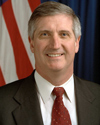
Card

Some observers feel that attempting to influence US policy is the kind of thing citizens are supposed to do.  Beyond any lapse in fundamental principles in this arrest, however, it is also apparent that the authorities find some unsuccessful attempts at influence acceptable.

The feds didn’t mind, for instance, when a DC-based network of rightwing think-tankers called the Project for a New American Century wrote a “Letter to President Clinton on Iraq” on January 26, 1998, insisting that Saddam Hussein should be forcibly removed from power.

Some background:

The Project for a New American Century (PNAC) is a group of military hardliners, mostly without military service, who boost an extremely hawkish U.S. foreign policy.

“Established in the spring of 1997, the Project for the New American Century is a non-profit, educational organization whose goal is to promote American global leadership. The Project is an initiative of the New Citizenship Project (501c3); the New Citizenship Project’s chairman is William Kristol and its president is Gary Schmitt.”

William Kristol is the editor of the Rupert Murdoch-owned Weekly Standard and appears as a weekly commentator on Fox News, also owned by Murdoch.  According to his PNAC biography,

“Before starting the Weekly Standard in 1995, Mr. Kristol led the Project for the Republican Future, where he helped shape the strategy that produced the 1994 Republican congressional victory.  Prior to that, Mr. Kristol served as chief of staff to Vice President Dan Quayle during the Bush Administration and to Secretary of Education William Bennett under President Reagan.”

Gary Schmitt was a GOP congressional staffer in the early 1980s and served on an intelligence advisory board under Reagan.  He has held numerous positions in think tanks, academia and consultancy.

The letter to Clinton supports only one objective, ousting Saddam Hussein:

“We urge you to . . . to enunciate a new strategy that would secure the interests of the U.S. and our friends and allies around the world.  That strategy should aim, above all, at the removal of Saddam Hussein’s regime from power.  We stand ready to offer our full support in this difficult but necessary endeavor.”

Asserting the now-familiar vague threat of “weapons of mass destruction,” the letter continues,

“The only acceptable strategy is one that eliminates the possibility that Iraq will be able to use or threaten to use weapons of mass destruction.  In the near term, this means a willingness to undertake military action as diplomacy is clearly failing.  In the long term, it means removing Saddam Hussein and his regime from power.  That now needs to become the aim of American foreign policy.”

This central aim of American foreign policy (removing Saddam), is to be pursued at all costs, regardless of risk:

“We urge you to articulate this aim, and to turn your Administration’s attention to implementing a strategy for removing Saddam’s regime from power. This will require a full complement of diplomatic, political and military efforts. Although we are fully aware of the dangers and difficulties in implementing this policy, we believe the dangers of failing to do so are far greater. We believe the U.S. has the authority under existing UN resolutions to take the necessary steps, including military steps, to protect our vital interests in the Gulf.”

It is chilling to read in this statement, dated January 1998, the exact arguments megaphoned by the Bush White House and its paid media supporters in the buildup to the invasion of Iraq in 2003.  Every indication is that Bush came into office in January 2001 with exactly the intention stated in the letter.

From his first days, Bush demonstrated an eagerness to appoint the letter’s signers to government positions.  Indeed, he announced signer Donald Rumsfeld as his Secretary of Defense on December 28, 2000, and signer Robert B. Zoellick as US Trade Representative (the President’s principal trade policy advisor) on January 11, 2001, before his inauguration.  Bush then announced signer and notable hawk Paul Wolfowitz as his Deputy Secretary of Defense on February 5; signer Richard L. Armitage, an old CIA hand, as his Deputy Secretary of State on February 12; and signer John R. Bolton as his Undersecretary for Arms Control and International Security Affairs on February 21.  Thus, before the end of one month in the White House, Bush had solidified almost every pertinent position in the Executive branch in the hands of hawks with a none-too-subtle agenda of entering Iraq, intervening in its internal affairs, and replacing its government.

None of this was made broadly known to the public, either by the administration or by major media outlets.  Only the New Republic (February 5, 2001) mentioned that “Vice President Dick Cheney has quietly been stocking the Defense Department with outspoken interventionists. . . Cheney has effectively created his own foreign policy apparatus, installing his proteges (and, in the case of Donald Rumsfeld, his mentor) at the Defense Department and the White House.”  The article further notes that “many of Cheney’s proteges are known for their willingness to use military force.”

The hiring pattern continued through spring 2001.  The selection of Iraq letter signer Paula J. Dobriansky was announced for Under Secretary for Global Affairs (State) on March 12, and of Peter W. Rodman as Assistant Secretary for International Security Affairs (Defense) on May 14.  Dr. Zalmay Khalilzad was appointed “Special Assistant to the President and Senior Director for Gulf, Southwest Asia and Other Regional Issues, National Security Council,” on May 28, 2001.  Khalilzad has since been named US Ambassador to Afghanistan.  Iraq letter signatory Elliott Abrams was also appointed by Bush to the National Security Council, in June 2001.

These individuals are not just any Iraq hawks.  Khalilzad, for instance, had worked in the first Bush administration in the Defense department and then went to work for the Rand Corporation, a major military contractor, in the 1990s.  Born in Afghanistan, he was also a consultant to US oil company Unocal, which for several years had attempted to launch a giant pipeline project in Afghanistan.

Elliott Abrams, an Assistant Secretary of State under Reagan, was indicted in 1991 by the special prosecutor in the “Iran-Contra” scandal, for giving false testimony before Congress.  He pled guilty to two lesser offenses, but was pardoned by President George H. W. Bush, along with other Iran-Contra defendants, on Christmas, 1992.  He participated in a number of rightwing Washington think tanks throughout the 1990s.

Peter W. Rodman was a Special Assistant to Dr. Henry Kissinger in the Nixon and Ford administrations and has since worked with Dr. Kissinger on his memoirs.  Rodman also served in the State department and the NSC in the Reagan and first Bush administrations, and “was most recently Director of National Security Programs at the Nixon Center (1995-2001),” according to his official Defense department biography.

This January 1998 letter was not the Project for a New American Century’s only call to arms regarding Iraq.  On May 29, 1998, most of the same signers wrote another letter to GOP congressional leaders Trent Lott and Newt Gringrich, wrathful over a supposed “capitulation to Saddam” when Clinton cooperated with the UN rather than removing Saddam from power.  This letter again asserted an unspecific danger from “weapons of mass destruction.”

Barely over a week after the attacks of September 11, 2001, the group hit the ground running with another letter.  Again, there was a reminder not to overlook the possibility of intervening in Iraq’s internal affairs, regardless of justification:  “It may be that the Iraqi government provided assistance in some form to the recent attack on the United States.  But even if evidence does not link Iraq directly to the attack, any strategy aiming at the eradication of terrorism and its sponsors must include a determined effort to remove Saddam Hussein from power in Iraq.”  This letter suggested a less direct engagement:  “The United States must therefore provide full military and financial support to the Iraqi opposition.  American military force should be used to provide a ‘safe zone’ in Iraq from which the opposition can operate.  And American forces must be prepared to back up our commitment to the Iraqi opposition by all necessary means.”  (September 20, 2001)

Signers of other PNAC letters also hold positions under Bush.  Aside from working in government, in think tanks, and on corporate and other advisory boards, or writing to the White House or Congress directly, the group also operates through the media, including the major television networks and the op-ed pages of major newspapers.

On July 22, 2002, the PNAC itself, in a memorandum to “Opinion Leaders,” kicked off the political campaign to drum up a war against Iraq.  The memo  flagged an article titled “The Coming War with Saddam,” in William Kristol’s Weekly Standard magazine.  Starting then, either the Weekly Standard or PNAC, or occasionally a ‘freelancer’ in league with them writing for the Washington Post, ran an article once a week for the next 16 weeks, pushing an Iraq war.

In spite of the fact that there was no new cataclysm in Iraq, the ground for war was prepared, and obviously (in hindsight) through cooperation with the White House.  On August 26, Vice President Cheney gave a speech to the Veterans of Foreign Wars, arguing for “preemptive military action.”  The point here is not just that a wildly new “policy” was enunciated that no previous vice president or president had ever supported, one that many actual veterans oppose.  The point is that a whole stream of writers and consultants of a sort, in league with dubious and murky factions compensating them in undisclosed ways, operated in concert with one branch of one administration, the Bush White House.

Their influence in the ‘mainstream’ media was immense.  That month, still without any new crisis in Iraq to justify the topic, commentators George F. Will and Charles Krauthammer alone put out seven columns, aside from television commentary, pushing war.  They followed up with similar columns for weeks afterward.

Radio hosts Rush Limbaugh and Bill O’Reilly also weighed in pro-Iraq-war in August 2002.  Like Will and Krauthammer, they kept up the barrage of commentary throughout August and on into fall.  That same fall, in the weeks leading up to the congressional elections, the reverends Jerry Falwell and Pat Robertson also swung into Islam-bashing and administration-opposition-bashing.

These media personalities were joined by a stream of lesser known talk hosts and op-ed writers, organized and otherwise, some supported by the Rupert Murdoch, Reverend Moon, and Clear Channel news empires which also funded lavish overall pro-war displays.

Although not all media commentators who share the PNAC’s views are members of the group, some are.  Syndicated columnist Charles Krauthammer, for example, signed the September 20, 2001, letter to Bush.

Over-all, there seems to be an almost unending pipeline of vaguely credentialed, partly scholarly, mostly non-veteran “consultants,” commentators, writers of a sort, minor government officials and advisors or staffers ready to pour out a cornucopia of reasons to bomb another country.  Most of these figures do not seem disinterestedly eager for bloodshed for its own sake.  More often, there is a whiff of financial motive in the picture.

Vice President Cheney’s former company, Halliburton, got contracts both from Saddam and Saddam’s downfall.  The PNAC’s Richard Perle recently resigned his position with the Defense Policy Board, a military advisory group, partly because of his ties to military contractors.  Zalmay Khalilzad’s individual interest in Unocal and Afghanistan has already been mentioned, above.  William Kristol’s publications and public forum are supported by Australian mega-media mogul Rupert Murdoch.  The notoriously anti-labor Murdoch benefits financially every time a militaristic foreign policy undermines the public sector, regardless of which country he’s investing in.

It goes without saying that the entities hiring this kind of expensive talent also contribute lavishly to political campaigns, and hire equally expensive lobbyists to Congress and the state legislatures. They also control a lot of people’s jobs to start with. Seldom, meanwhile, do invididuals in this cloudy network have family members liable to be sent to Iraq.  Seldom, indeed, do they have genuine expertise, credentials, experience or personal stake in the issues they handle.

It would probably be a mistake to call this syndication ‘conservative.’  Rather, it is basically a synchronized corporatist party, whose members are given careers of manufactured prominence and dominate agendas and topics in the media.  It is also consistently in league with the Bush White House, regardless of the national interest.

In retrospect, it looks as though the public never had much of a fighting chance.  It also looks as though Bush’s pretense that war was a last resort was deception.


[This article, deleted by the system among hundreds of articles and blog posts in summer 2011, is re-posted using archives and Word files.]