24th in blog series on the push to
February is a bush month for the administration, as it works on its war plans
and tries to
2002

24th in blog series on the push to
February is a bush month for the administration, as it works on its war plans
and tries to
2002
administration push to war with
2001
Dec. 17,
2001 (about)
19th
in blog series chronicling the administration push to war. As the Christmas
season approaches, the White House takes advantage of the holidays to
consolidate its
mostly behind the scenes.
Dec. 1-
15, 2001
Late
2001
in blog series chronicling the administration push to war with
Nov.
20-30, 2001
From machines to multinationals
Administrations engaged in the old-fashioned political corruption of appointing people to government jobs because of donations or connections rather than expertise, accepting illegal campaign contributions, and using the power of office to solicit contributions are machines, like the old machine of Tammany Hall. The history of every big city in America is partly a history of machine politics. Big men in loose party organizations bestowed favors including jobs to do themselves good, bringing in nephews and in-laws, family friends and neighbors, dishing out jobs where the dishing was doable and sometimes inventing positions not previously available or heard of. Almost every ethnic community except people like the Mennonites made every effort to cover its own bases and to extend the umbrella over its own as much as possible, not only the Irish-Americans who went into law enforcement, but also Americans of Italian, Polish, and Jewish descent. Even Tammany had to negotiate with the machine in Harlem.

Machines at work
It would be misperception to gloss over the days of pure ward politics with nostalgia. Almost every new immigrant population did to the next what had been done to it, their tactics often dishonest, the results horrible, and the elections a joke. And those were the elections with livingvoters.
Politics reeked of the insularity, prejudice, and crime as flamboyant as in the famous 1991 Louisiana gubernatorial race between Kluxer David Duke and the repeatedly-indicted Edwin Edwards.

Edwin Edwards
Some Edwards supporters plastered on bumper stickers that read, “Vote for the crook. It’s important.”

Duke
Still, a big difference between the old machines and today’s mammoth maneuvering behind the scenes is that the machines were to some extent playing the politics of inclusion.
Today the smart money is exclusionary. The big money–the biggest in world history–is on keeping people out. This situation has a number of causes, including consolidation in media outlets that tends to keep the entrenched mediocre and the mediocre entrenched. But the results are unequivocally destructive.
However bad the old machine politics were, they were at least understandable. Their principle, such as it was, was simple: you take care of us; we’ll take care of you. It was understood that each bunch of politicos, jobholders and ‘volunteers’ would try to get what it could and keep what it had, each group scrambling for itself, and neighborhoods, schools and businesses survived under the arrangement. They were fighting over turf, but it was turf developed by the people who worked, prayed, and sent their children to school on it, on which they built grocery stores, ran fire departments, and got law degrees by attending night classes.
What turf are today’s neocons and the actual foreign policy experts fighting over? Whose neighborhood or small town is Clinton or Romney or Giuliani scrambling to protect, or the biggest political contributors, mostly GOP, in the insurance, pharma and tobacco industries? All these parties have a vested interest in globalization, which means latching onto large corporations that cross national lines. Whose community are they working for? Taiwan?
This suggestion is not tossed out at random. Among the worst excesses of the traditional machines was their collusion with gangs and gangsters, and at this writing the D.C. suburbs of northern Virginia, the epicenter of yuppiedom, are also a hub of some strikingly aggressive Asian gangs. This topic is not one on which the White House and the First Lady, in her campaign for at-risk male youth, have touched publicly.
The flavor of American politics has changed with the economy, over the past thirty years; fire department, police and post office jobs aren’t handed out the way they used to be; the manufacturing sector and the rest of America’s basic industries – copper, steel, maritime, rails – have declined; and most people are dependent on a white-collar job or a pink-collar job or a no-collar job. And as typical white-collar jobs go, political appointments are fairly plummy; not everyone can get in. But it’s not the government jobs that are political plums, it’s the behind-the-scenes contracting in consulting, producing and handling campaigns, and contracting itself – contractors handle government and other procurement, and handle employment decisions for both public and private entities. Until the Internet opened up campaigns somewhat, campaigning became well-paid turf to be protected from the common gaze, even more than some government positions, and a committed citizen who went to a campaign headquarters to volunteer, full of zeal and enthusiasm, was at least as likely to be shunted off as brought in.
As said, the nature of campaigning has become more inclusive again, partly because of the Net roots. But the politically-influenced sector of the job market, and that is a huge sector, has not become more inclusive. These days, someone who applies for a job writing for the Postal Service, for example, is liable to be vetted by a subcontractor working – not for our government – but for one of the huge military contractors such as Lockheed Martin. And with 68 percent of college faculty teaching in part-time or non-tenure-track positions, virtually any former CIA director or other government official has a better chance of snaffling one of the few ‘good’ academic jobs than virtually any longtime professor.
In other words, it’s not just security-clearance, high-tech, defense-oriented positions that are increasingly controlled or influenced by our expanding military-industrial-surveillance complex, with damage to our foreign policy now abundantly documented. It is our intellectual infrastructure.
No candidate has voiced the damage done to our reading and writing realm in the United States by adverse dominance over what should be a realm of independent thought.
[This article, deleted by the system among hundreds of articles and blog posts in summer 2011, is re-posted using archives and Word files.]
Kudos to Sen. Christopher Dodd (D-Conn.) for doing what had
to be done: he put a
hold on the administration
Calling all bloggers: Are you ‘covered’ under House ‘reporter’s shield law’?
Yesterday the House passed by a substantial margin its version of the “reporter’s shield law,” titled the Free Flow of Information Act of 2007. The House version differs from the Senate bill of the same title in its definition of “covered person,” basically the definition of who is a journalist.
The House version reads,
“(2) COVERED PERSON- The term `covered person’ means a person who regularly gathers, prepares, collects, photographs, records, writes, edits, reports, or publishes news or information that concerns local, national, or international events or other matters of public interest for dissemination to the public for a substantial portion of the person’s livelihood or for substantial
financial gain and includes a supervisor, employer, parent, subsidiary, or affiliate of such covered person.”
The Senate version reads, “(2) COVERED PERSON- The term `covered person’ means a person who is engaged in journalism and includes a supervisor, employer, parent, subsidiary, or affiliate of such person.”
For many reasons, the Senate version looks better.
First, a disclaimer: so far as I know, I don’t have a dog in this fight. I don’t foresee having this kind of problem. Anyone who tried to force me to say something I didn’t want to say, a remote possibility, would be crossing a line; and anyway I tend to favor disclosure in the public interest.
Furthermore, administration ‘sources’ do not call me up to toss Lawrence Lindsey overboard, or Tom DeLay, or Alberto Gonzales, or any other public official, career or appointee. Nobody tells me anything. Or to put it more precisely, people tell me things, but I usually cite by name unless there’s a general-information kind of paraphrase involved, or just gossip, or some other good reason not to. And while I have been quasi-mugged on the street–by some guy who knocked me down & hit me, etc w/out taking my bags–and
have gotten a certain amount of nasty mail – though the letters of praise by far outnumber the other kind–I have never had anyone lean on me to pry confidential information out of me. It is unlikely to happen, since I’m not what they used to call ‘easy’. Insiders who call up some ‘journalist’ to plant a
smear under cover of ‘confidentiality’ are contemptible (that’s the real story), and journalists should not be serving as our contemporary substitute for the Lion’s Mouth in Renaissance Venice in a behind-the-scenes system of anonymous denunciation.
But to evaluate this reporter’s shield, one has to look at who IS ‘covered’ under the House definition, and who is NOT. A key passage, as readers may already know, is that bit about “a substantial portion of the person’s livelihood or for substantial financial gain.” Admittedly this passage takes a certain amount of guesswork, since the terms “substantial portion” and “substantial financial gain” do not come with dollar amounts. Still —
Here, in all likelihood, are some of the people NOT COVERED under this definition:
• Most bloggers, except for reportedly Matt Drudge
• Many web site editors and producers, especially of left-leaning, ‘liberal,’ green or progressive web sites
• Almost all web site editors and producers of small web sites across the Net
• Many or most columnists for small community newspapers such as the Prince George’s Journal, where I published articles from 1996 to 2004, and the Prince George’s Sentinel, where I published articles 2004-2006
• Many reporters for small community newspapers
• Many editors for small community newspapers
• Many publishers of small community newspapers: producing them may involve expense but not necessarily profit, income
• Any journalist contributing to a periodical on a volunteer basis
• Many or most freelancers, depending on the time frame for defining finances
• Retired journalists who weigh in with an occasional column or article at, e.g., the WashPost’s op-ed page
• Interns who perform journalistic duties at recognized media outlets but without much pay or a job guarantee
Here, on the other hand, are some of the people COVERED under this definition:
• Almost everyone who works for Fox News
• Matt Drudge
• Almost everyone who works for any of the major media outlets–CNN, the three original networks, their subsidiaries; the large daily newspapers; etc.–as long as that person has a good regular salary; see interns and retirees, above
• Salaried writers and editors working for any of the trade periodicals – insurance, trucking, pharmaceuticals, etc.
• Talk radio hosts, their writers and producers, if their income comes mostly from the gig
In other words, a ‘covered person’ is basically anyone Bob Novak could tolerate, and not covered is everyone who might hypothetically or even accidentally be perceived as a threat to the Novaks of this world. What could be sweeter? –for Robert Novak. Is it any wonder that this bill was introduced
by the GOP and that it has passed by a whopping margin, in a House full of terrified incumbents? Or that it is supported by the same mediocre media outlets that facilitated GWBush in the White House, the non-investigation of torture in 9/11 investigations, and the Iraq war?
John Conyers (D-Mich.) is one of my personal heroes, one of the best people in Congress, ever, not just for our time but a man for all seasons. I am absolutely confident that he supported this measure for the best of reasons. But the more I look at this language, the more it looks as though opinion makers hired by Richard Mellon Scaife and rewarded by the Bradley Foundation would be covered, and the homeless who write for Street Sense–D.C.’s homeless newspaper–would not be covered.
It also looks as though the overpaid would be covered, to a man, while any underpaid blogger, freelancer or reporter-editor who has to combine income sources would not be–a cohort disproportionately comprising women, the underemployed, members of poor fundamentalist or other ‘fringe’ groups from right to left, and simply people of modest means.
Too bad about the way it breaks down into people on one side, money on the other. It will be interesting to see what happens in conference, if the Senate passes its version. I’m not too optimistic; good thing I never looked to Congress for protection anyway. More the other way around, as I see it.
Bush administration helped the Iranian hardliner get elected
Ali Hashemi Rafsanjani, the only major Iranian figure who advocated reaching out to America, made indirect overtures to the Bush administration in the period leading up to the June 2005 Iranian election but was rebuffed, according to American businessman Barry O’Connell, who frequently travels to Iran.
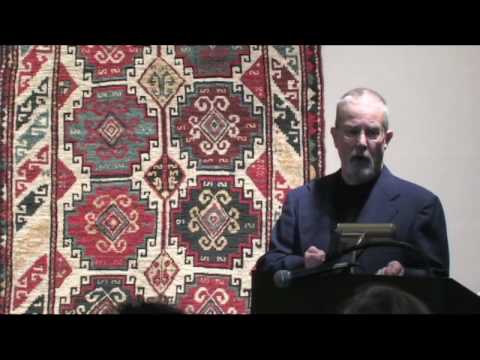
McConnell at the Textile Museum
State Department personnel referred pejoratively to Rafsanjani, the political figure best known outside Iran and most favored by the international business community, as “that old fox” and “that old wheeler dealer,” O’Connell said. Feelers preceding the election last June were conveyed through members of the Iranian legislative assembly via business contacts, reaching the Southeast Asia section of the State Department. According to State Department personnel, O’Connell said, messages that Rafsanjani was interested in talking with the U.S. were relayed “upstairs” to the seventh floor offices of the Secretary of State.
The feelers were ignored. Asked whether the Bush administration opposed Rafsanjani influenced the Iranian election, O’Connell answers, “Very much so.”
In the weeks leading up to the Iranian election, media sympathetic to the administration aired anti-Iran commentary including that of Bill O’Reilly, who has repeatedly attacked Iran on his Fox television program.

Typical
Other impediments to cooperation with moderate, secular or business sector Iranians were imposed in the weeks leading up to the election, including restraints to travel in and out of Iranian air space by companies including federal contractors. These signs were taken by many Iranians around the time of the election to signify that Iran was going to be attacked by America.
The administration rebuffs decreased the ability of Rafsanjani to draw support. “He was almost the only one reaching out to America, and they treated him this way?” O’Connell comments. “They said it to me personally, so they must have said it to others. This administration would not deal with him at all.”
One export of Iran, aside from oil, is Oriental rugs. O’Connell, an authority on Iranian rugs, has a vested interest in keeping the trade linking Europe, the U.S. and Asia alive. Despite sanctions and lists, commerce between the West and Iran still flourishes. Iranian Foreign Ministry spokesman Hamid Reza Asefi said on January 15 that Iranian trade with Europe overall stood at the same level as a year previously, although trade with individual nations has moved up or down.
That makes it more significant that the administration, with strong business connections, declined to show interest in approaching Rafsanjani. Indications that the administration is ginning up some version of assault on Iran have appeared since spring 2005, including sympathetic media representations. Since there are not enough U.S. ground troops for an infantry assault, any attack would have to involve heavy bombings.

Rafsanjani
In response to questions about other Iranian candidates, O’Connell says that the administration did not seem concerned about Ahmadinejad at all. There was no apparent concern, at the policy making level, that a hardliner or radical fundamentalist might be elected in Iran as a consequence of administration policy. The possibility, treated as inevitability in rightwing publications and think tanks associated with White House Middle East strategizing, seems not to have been regarded as an outcome to be avoided.
Since the election, Rafsanjani has increased in his powers, according to O’Connell. “He is not out of power at all.” New President Ahmadinejad gets the spotlight but does not have equivalent power.
The bulk of power is held by the Supreme Leader Ayatollah Ali Hoseini-Khamenei, in office since 1989, and by the head of the expediency committee. Thus power is largely shared among the Supreme Leader, the committee head, Rafsanjani and the new head who has received all the global attention.
These internal divisions in Iran are not reflected in official administration speech about Iran. The White House, Secretary of State Rice, and neoconservatives in media have focused publicly on President Ahmadinejad, whose lurid and inflammatory rhetoric makes the project easy. The National Review, founded by William A. Rusher, who also founded the Concerned Alumni of Princeton and is chairman of the media corporation that launched the most recent attack on Rep. John Murtha, is running articles about Iran that parallel past articles leading up to the Iraq war.

Bouquets, banquets, and saber-rattling
O’Connell points out that, while neoconservatives advocate several months of concentrated bombing Iran, to bomb purported Iranian nuclear sites, those sites are in residential neighborhoods.
Supposing the administration were to bomb millions of Iranians, for two or three months, as neoconservatives propose. “If we start another war,” in Iran this time, “how do we get out of it?”
Right now, the U.S. maintains a tenuous hold in Iraq because of the majority Shia population which, led largely by Ayatollah Sistani, has chosen to participate in politics in Iraq. But Shia in Iraq would react against the bombing of millions in Iran, where Shia are 89 percent of the population.
Shia Islam has two main schools of thought. The more theocratic school of thought predominates in Iran, and the school that more supports separation of church and state predominates in Iraq. Administration policy seems to aim at driving the two populations together in opposition to the U.S. This would approach the goal of war with all Islam, global war between the West and Muslims, advocated by some neoconservatives and also by Osama bin Laden.

bin Laden
Iran has no embassy in the U.S. But it does have an Iran Interest Section in the embassy of Pakistan. Protests have erupted across Pakistan at the deaths of Pakistani civilians in recent U.S. military strikes.
Following a speech on January 14 by President Ahmadinejad defending Iran’s nuclear research, Iranian officials complain that CNN translated a phrase “nuclear weapons” that should have been translated “nuclear technology.”
Meanwhile, a Russian government official said on January 15 that Russia is continuing its military and technological cooperation with Iran.
[This article, deleted by the system among hundreds of articles and blog posts in summer 2011, is re-posted using archives and Word files.]
In 1971, decorated Vietnam War veteran turned antiwar activist John Kerry asked a Senate committee, “How do you ask a man to be the last man killed in Vietnam?”
Today we need to ask an updated question: what is the centrist number of people killed in Iraq?
[Example headline: “Democrats Push Toward Middle On Iraq Policy,” WashPost Sept. 13, 2007]
Twentieth-century physics upended previous ideas about time,
space and mass. Mass converts into energy; energy changes rather than being
gained or lost; time and space are relative to each other. Albert Einstein, he
of the adorable face, space-physics hair, and loving eyes, combined some
premier principles into one simple formula.

Einstein
Heading into the 21stcentury–and stuck in Iraq, unless we the people do something about it–we need to apply some equally lucid conversion principles to the Iraq war.
Here is the simple formulation: the more time we spend in Iraq, the more lives lost.
Time translates to death. More time translates to more death and injury. Less time translates to less death and injury.
This is the formulation that the White House, the GOP in Congress, and most Republican candidates for the White House, with the honorable exception of Ron Paul, do not want mentioned. They keep trying to change the real formulation – more time means more fatalities – into the bogus alchemy of self-serving rhetoric – less time means ‘failure,’ while for unspecific reasons more time in Iraq means ‘success.’ Pulling out – that is, reducing our losses of life, limb and treasure suffered–means ‘losing,’ and staying means–again, for unspecified reasons– ‘victory.’
The real loss was going in. The real failure was the immoral, illegal and unconstitutional invasion of another country.
Meanwhile, top-crust administration figures and their allies in the large media outlets keep using a similar head-banging Orwellian lexicon to characterize the big argument about the war. People who want us out of Iraq, in this War-Is-Peace twist, are “left”–never mind public survey polls showing that a solid majority of Americans want us out of there. People who insist on our staying in Iraq, on whatever omigod pretext, are characterized as “conservative”–never mind that Congressman Paul (R-Texas) and many of his supporters are conservative, as are publications such as Chronicles Magazine that have consistently opposed the war.
Most grating of all, officeholders and candidates for office who keep us stuck in Iraq by waffling publicly, temporizing instead of taking a stand, are characterized as “centrists,” or “moderates” as in a series of Washington Post items about Maine Senator Olympia Snowe, designated “the anguished moderate.”
Virtually all the big media outlets have adopted this terminology, even though this kind of language desecrates the very notion of language– English–as communication.
More time in Iraq means more casualties. Less time in Iraq means fewer casualties. It’s that simple. So what is the ‘moderate’ number of young American servicemen and servicewomen to be injured or worse? Even aside from the fact that we are currently nearing the 4,000 mark, what was the ‘moderate’ position on the acceptable amount of death, injury, psychological trauma, sexual assaults and domestic violence, and all the other ills connected with war, going into Iraq? Now that we are nearing the 4,000 mark for deaths, what is the ‘moderate’ quota for American death in Iraq and Afghanistan? What, for that matter, is the moderate quota for killed and wounded Iraqis?
What is the ‘centrist’ number of deaths in Iraq?